If you’re thinking about having your garage floor coated, there’s a good chance you’ve wondered about this: Are epoxy garage floors slippery?
It’s a reasonable question. Epoxy floors have that clean, polished appearance that homeowners love, but a shiny floor can also look like it would be slick to walk on.
The short answer is that an epoxy garage floor can be slippery when wet, especially if it has a very smooth finish. But that’s not the whole story. The texture of the finished floor, the coating system being used, and whether traction additives are incorporated can all make a difference.
So before you rule out epoxy flooring because you’re worried about slipping—or assume every coated floor is automatically slip-resistant—here’s what you should know.
Why Epoxy Garage Floors Can Feel Slippery
One of the reasons epoxy garage flooring is so easy to clean is also the reason people ask about traction.
Bare concrete is porous and relatively rough. A garage floor coating creates a much smoother, sealed surface.
That’s great when you’re sweeping up dirt or cleaning a spill, but smooth surfaces can become slick when water, oil, or other liquids are sitting on them.
Think about what happens in a typical garage. You pull in during a rainstorm and water drips from the vehicle. Maybe you’re washing the car or working on lawn equipment. An oil drip or another spill happens.
Any of those things can make a hard flooring surface more slippery.
That’s why the better question isn’t simply, “Is epoxy slippery?”
It’s “How is the epoxy garage floor finished?”
Not Every Epoxy Garage Floor Has the Same Texture
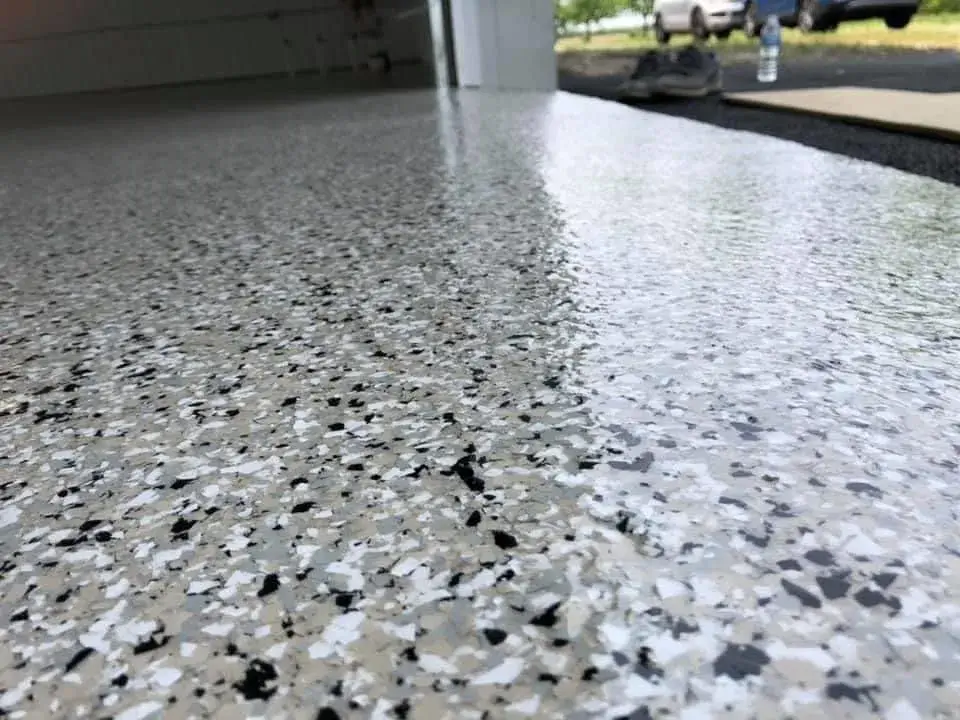
Spend a little time searching for garage floor coatings and you’ll see everything from smooth, solid-color floors to decorative flake systems.
They may all fall under the general category of coated garage floors, but they don’t necessarily feel the same underfoot.
Surface texture plays an important role in traction. A completely smooth finish can feel different from a floor designed with additional texture or a slip-resistant additive.
That’s something worth discussing before your garage floor installation rather than after it’s finished.
If traction is particularly important to you, tell your installer how you use the garage and what your concerns are.
A family constantly coming through the garage with wet shoes may have different priorities than someone primarily using the space for vehicle storage.
What Happens When an Epoxy Garage Floor Gets Wet?
This is probably the biggest concern for most homeowners.
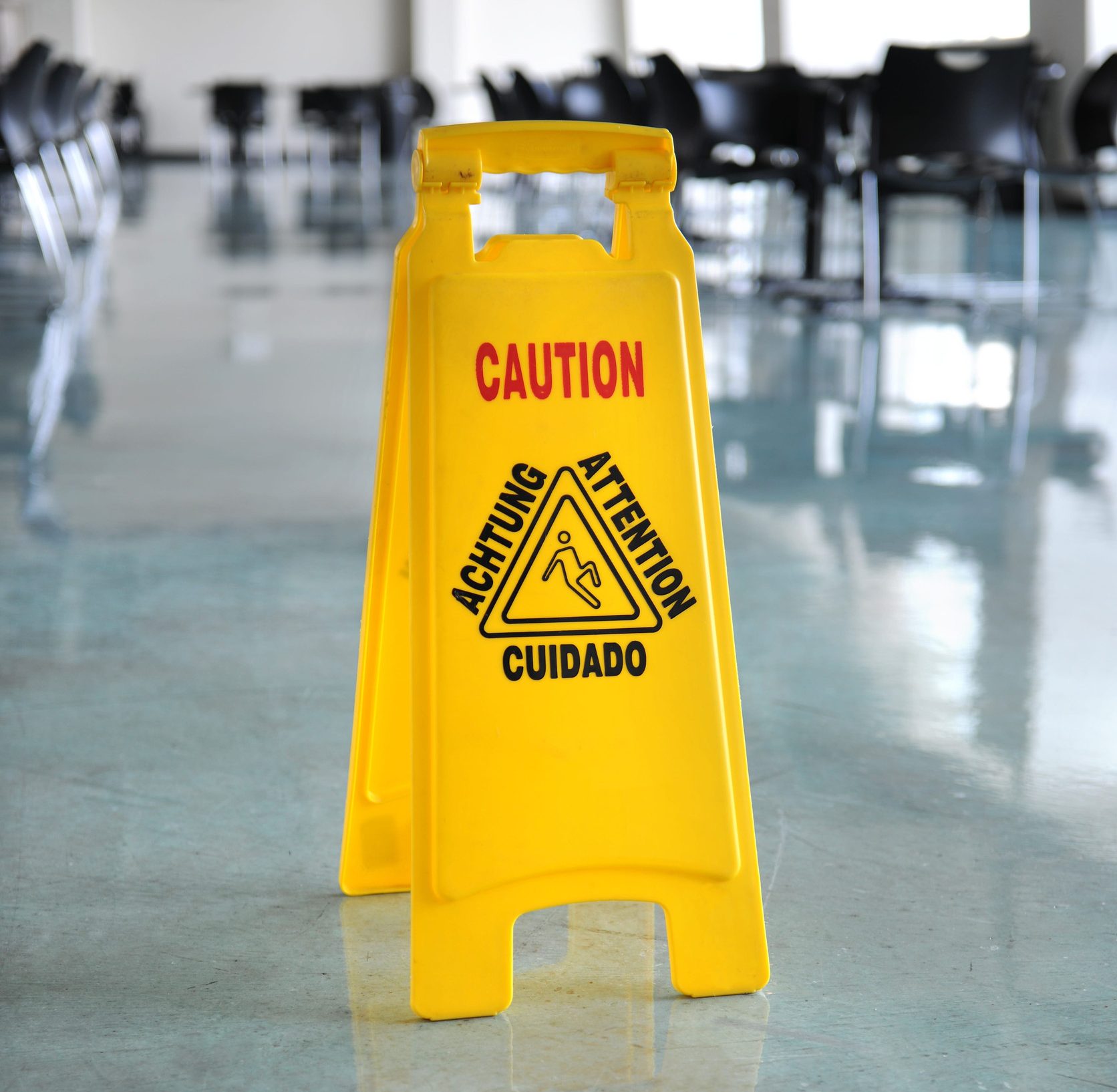
Yes, a smooth epoxy floor can become slippery when it’s wet.
But let’s put that into the context of an actual garage.
Garages deal with water all the time. Rain comes in on vehicles. Snow and slush eventually return in the winter. Cars drip after being washed. Sometimes a bucket gets knocked over during a weekend project.
One advantage of having a coated garage floor is that water doesn’t immediately disappear into porous concrete. It’s sitting on a sealed surface where you can see it and clean it up.
Of course, that also means you shouldn’t leave standing water on the floor and assume it’s perfectly safe to walk through.
The best approach is pretty simple: when you see water or another spill, clean it up.
Oil Can Be Slippery on Any Garage Floor
The same thing applies to oil and automotive fluids.
If you’ve ever stepped on a small oil spot, you know it doesn’t take much to lose traction. That’s true whether your garage floor is concrete, epoxy, or another hard surface.
The difference is what happens after the spill.
Bare concrete can absorb automotive fluids surprisingly quickly, which is why older garages often have dark oil stains that never seem to disappear.
A professionally coated floor creates a sealed surface, giving you an opportunity to clean up the spill rather than watching it soak directly into the concrete.
That makes maintenance easier, but it doesn’t mean you should leave oil sitting there.
If something spills, wipe it up. Your floor—and your shoes—will thank you.
What About Decorative Flake Garage Floors?
Decorative flake is popular for a reason.
It gives epoxy garage flooring more visual depth than a plain solid-color surface and can help create the finished look many homeowners want.
Depending on how a flake flooring system is constructed and top-coated, it can also contribute to the overall surface profile. However, decorative flake shouldn’t automatically be treated as a substitute for a dedicated traction additive when additional slip resistance is needed.
At Lifestyle Garage, decorative flake is part of our garage flooring system, along with 100% solids epoxy and 100% solids polyurea.
The important thing is to look at the flooring system as a whole rather than assuming one individual component determines how the finished floor will perform.
Slip-Resistant Doesn’t Mean Slip-Proof
This is an important point that sometimes gets lost when people are researching garage flooring.
There’s a difference between slip-resistant and slip-proof.
No garage floor should be treated as impossible to slip on.
Water, oil, snow, mud, and other substances can reduce traction on virtually any hard surface. That’s simply part of having a working garage.
Texture and traction additives can help improve grip, but homeowners should still use common sense when the floor is wet or contaminated.
That’s especially important around entrances, stairs, and other areas where people regularly walk.
There’s a Balance Between Traction and Easy Cleaning
Here’s something homeowners may not think about until they start comparing garage floor coating options.
You probably don’t want your floor to be completely smooth, but you may not want it extremely rough either.
Why?
Because one of the biggest advantages of epoxy garage flooring is how easy it is to maintain.
An excessively rough surface can catch dirt and make sweeping or cleaning more difficult. A very smooth surface may be easier to clean but can provide less traction when wet.
A well-planned garage floor needs to balance those priorities.
You want something durable. You want it to look good. You want to be able to clean it without spending all afternoon scrubbing. And you want an appropriate amount of traction for how the space is used.
That’s why it’s worth having this conversation with a professional installer before choosing your flooring system.
Don’t Choose an Epoxy Floor Based on Photos Alone
It’s easy to fall in love with a garage floor you see online.
You find the perfect flake combination, save the photo, and think, “That’s exactly what I want.”
There’s nothing wrong with getting inspiration that way, but appearance is only one part of choosing the best garage floor coating for your home.
Ask about the actual flooring system.
What materials are being used? How will the concrete be prepared? How is the finished surface constructed? What should you expect when it’s wet? Are traction options available if you want additional grip?
Those questions will tell you a lot more about a garage floor than an Instagram photo ever could.
Professional Installation Matters
The finished epoxy is only part of a professional garage floor installation.
What happens underneath it matters just as much.
At Lifestyle Garage, we use a two-day installation process with 100% solids epoxy and 100% solids polyurea. Proper concrete preparation is an important part of that process because the flooring system needs the right surface to bond to.
The goal isn’t simply to leave behind a shiny floor.
It’s to create a durable, finished garage surface designed for everyday use.
Is Epoxy Flooring a Good Choice for a Busy Garage?
For many homeowners, absolutely.
A professional epoxy garage floor gives you a durable, sealed surface that’s much easier to maintain than unfinished concrete. It can protect the concrete underneath while completely changing the look and feel of the garage.
And it’s made for spaces that actually get used.
Vehicles can come and go. Lawn equipment can be stored inside. Bikes, tools, workbenches, and storage can all remain part of everyday garage life.
You don’t need a garage that looks like a showroom you’re afraid to touch.
You need a floor that looks good and works for your home.
So, Are Epoxy Garage Floors Slippery?
A smooth epoxy garage floor can become slippery when wet, just like many other hard flooring surfaces.
But that doesn’t mean every epoxy floor has the same level of traction.
The flooring system, finished texture, and use of traction additives can all affect how the surface feels underfoot. That’s why it’s important to talk about traction before your garage floor coating is installed, especially if your garage regularly deals with water or other slippery conditions.
Ultimately, choosing the right epoxy garage flooring isn’t just about picking a color you like.
It’s about choosing a flooring system that fits the way you actually use your garage.
Find the Right Garage Floor With Lifestyle Garage
If you’re considering epoxy garage flooring but still have questions about traction, durability, maintenance, or the installation process, we’re happy to help.
At Lifestyle Garage, we install professional garage flooring using a two-day process with 100% solids epoxy and polyurea. Our goal is to give homeowners a durable, attractive garage floor that’s made for real life—not just something that looks good in a picture.
If you’re ready to move beyond bare concrete, let’s talk about what you’re looking for in your garage and find a flooring solution that makes sense for your space.